
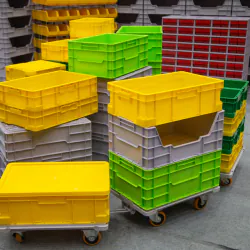
The manufacturing industry is a cornerstone of economic growth, responsible for producing everything from automobiles and electronics to textiles and consumer goods. To keep up with high production volumes and competitive market demands, manufacturers require storage and transportation solutions that are durable, efficient, and cost-effective. Two products that have become indispensable in this space are Industrial plastic bins and stackable plastic crates. Their robust design, versatility, and sustainability benefits make them essential tools for modern manufacturing operations.
The Storage Challenges in Manufacturing
Manufacturing environments are highly dynamic. Raw materials, semi-finished goods, and final products all need to be stored, transported, and organized efficiently. Traditional packaging options such as wooden pallets, cardboard boxes, or metal containers often fail to meet the rigorous demands of these environments.
Wood deteriorates quickly and is prone to splintering. Cardboard, though lightweight, cannot withstand heavy weights or long-term use. Metal bins, while strong, are expensive, heavy, and susceptible to corrosion. This is where industrial plastic bins and stackable plastic crates provide a superior alternative.
Durability and Strength
Manufacturing plants involve heavy handling, exposure to chemicals, and frequent movement of materials. Industrial plastic bins are specifically designed to endure such conditions. Made from high-grade polymers, these bins are resistant to impacts, corrosion, and chemicals. Unlike cardboard or wood, they do not degrade when exposed to moisture or oil, making them perfect for tough industrial environments.
Similarly, stackable plastic crates offer structural integrity, ensuring goods remain protected during storage and transport. Whether handling automotive parts, electronic components, or textile products, these crates withstand demanding use without compromising on quality.
Organization and Workflow Efficiency
One of the biggest advantages of plastic bins and crates is their ability to streamline workflow. Manufacturing plants thrive on efficiency, and disorganized storage can lead to costly delays. Industrial plastic bins allow for systematic categorization of raw materials and components, reducing the time spent searching for items.
Stackable plastic crates enhance this efficiency by offering a modular system of storage. Workers can stack crates securely, saving floor space and creating easy-to-manage inventory zones. This organization translates to smoother production processes and higher productivity.
Compatibility with Automation
Modern manufacturing facilities are rapidly adopting automation technologies, from robotic handling systems to conveyor-based movement. Industrial plastic bins and stackable plastic crates are designed with standardized dimensions, making them highly compatible with these automated systems.
Space Optimization
Space is a premium resource in factories. Stackable plastic crates address this challenge effectively. When filled, they stack securely on top of one another, utilizing vertical space and reducing floor clutter. When empty, many models are nestable, collapsing into smaller volumes and saving up to 70% of storage space.
Cost-Effectiveness Over Time
Although the upfront cost of industrial plastic bins may be higher than cardboard boxes, their reusability makes them far more economical in the long run. A single bin can last for years, enduring thousands of uses, compared to disposable alternatives that require constant replacement.
Stackable plastic crates offer similar financial advantages. By reducing the risk of product damage, they help manufacturers cut costs related to defective or wasted goods. Over time, these savings contribute significantly to profitability.
Safety and Ergonomics
Workplace safety is a priority in manufacturing. Industrial plastic bins and stackable plastic crates are lightweight compared to metal containers, making them easier to handle and reducing the risk of workplace injuries.
Many designs also include ergonomic grips, smooth edges, and stable bases to ensure safe manual handling. By prioritizing safety, manufacturers not only comply with regulations but also boost employee morale and productivity.
Versatility Across Sectors
The adaptability of plastic bins and crates is one of their strongest features:
- Automotive Manufacturing: Store and transport heavy parts such as bolts, gears, and panels.
- Electronics: Safely handle delicate components with anti-static plastic bin options.
- Textile Industry: Organize and move fabric rolls and finished garments.
- Chemical Manufacturing: Use chemical-resistant bins for safe storage of hazardous materials.
This versatility ensures that every manufacturing sector can benefit from their use.
Conclusion
The manufacturing industry demands reliability, efficiency, and sustainability in every aspect of its operations. Industrial plastic bins and stackable plastic crates deliver these qualities, making them a smart investment for businesses aiming to improve workflow, reduce costs, and support eco-friendly practices.
More Stories
The Oldest Perfume Store in Delhi – Discover the Best Attars, Perfumes & Incense at Gulab Singh Johrimal
Experience Timeless Fragrance: Buy Incense Cones, Bakhoor, and Luxury Perfumes Online with Gulab Singh Johrimal in Delhi
Garima Kawariya Designs: Your Destination for Celebrity Fashion Designer Wear in India